When someone sends you “STFU” in a text message, you might wonder whether they’re joking, angry, or genuinely telling you to stop talking. This popular internet abbreviation can express several emotions, but its wording is naturally harsh.
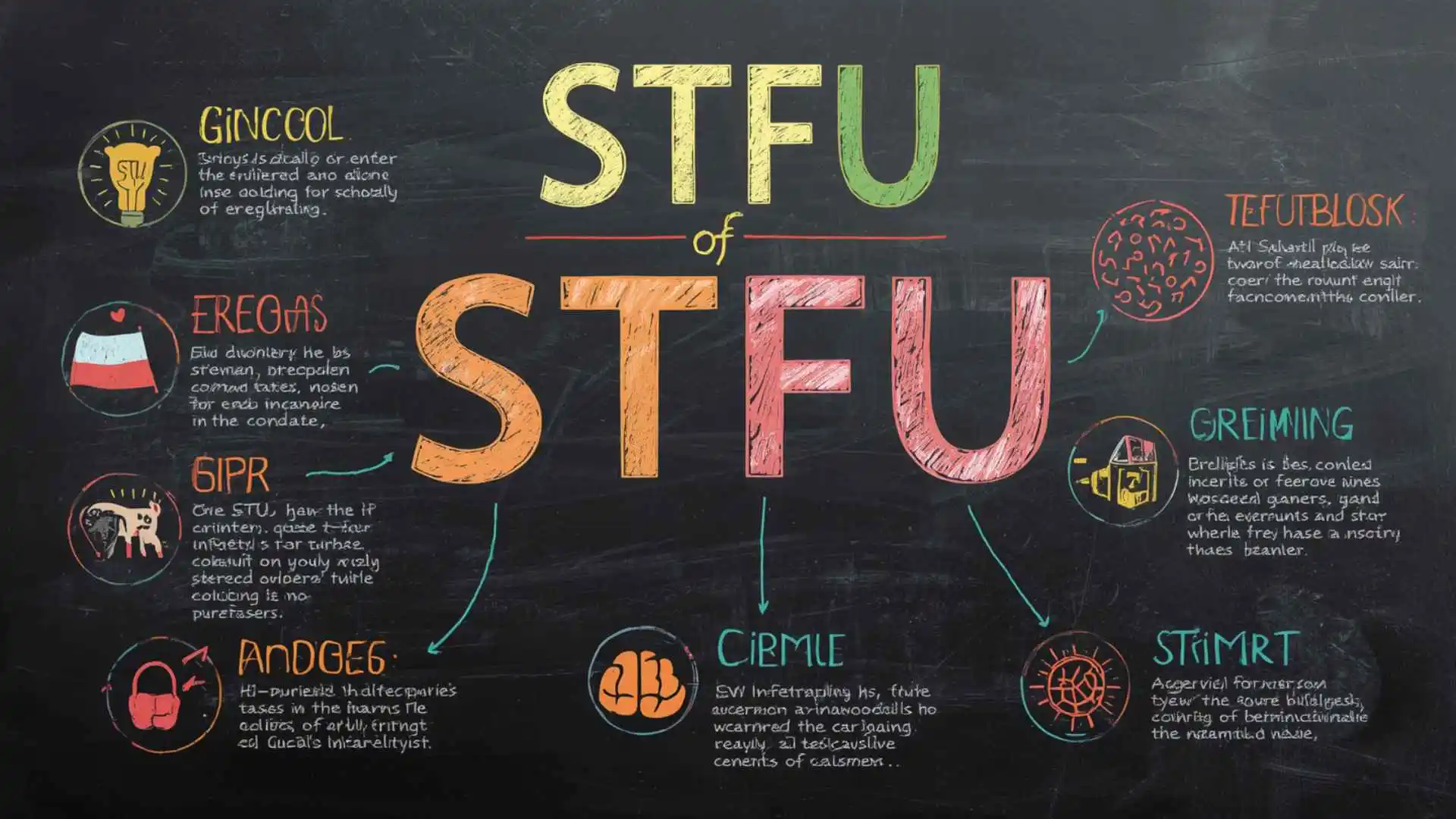
STFU stands for “shut the fuck up.” People use it in text messages, private chats, social media comments, gaming conversations, and online jokes. Depending on the situation, it can express annoyance, disbelief, excitement, or playful teasing.
Understanding the STFU meaning in text requires more than knowing the full form. You also need to consider the relationship between the speakers, the conversation’s tone, and the words surrounding the abbreviation.
This guide explains what STFU means, how people use it, whether it’s offensive, and how to respond when someone sends it to you.
What Does STFU Mean?
STFU means “shut the fuck up.” It’s a vulgar English expression that tells someone to stop talking or be quiet. People often use this abbreviation because typing four letters feels quicker than writing the complete phrase.
The STFU definition depends partly on context. Someone might use it during an argument to express anger. Another person might send it to a close friend after hearing surprising news.
For example:
- Angry: “STFU! I’m tired of arguing about this.”
- Playful: “STFU 😂 You actually won the competition?”
- Surprised: “STFU!! You got the job?”
These messages share the same abbreviation but communicate different emotions. The first sounds confrontational, while the others may express disbelief or excitement.
What Is the STFU Full Form?
The STFU full form is “shut the fuck up.” Each letter represents one word:
| Letter | Word |
| S | Shut |
| T | The |
| F | Fuck |
| U | Up |
The phrase combines a command to stop speaking with a profanity that makes the command more forceful. That’s why STFU often sounds harsher than simply saying “be quiet.”
People use the abbreviation in informal digital communication because it conveys a strong reaction quickly. However, its short form doesn’t remove the offensive meaning of the original phrase.
What Does STFU Stand for in Slang?
In internet slang, STFU is a four-letter initialism used in casual digital conversations. People recognize it as a blunt command, although its intended tone can vary.
You’ll commonly encounter it in:
- Text messages between friends
- Private messages and direct messages (DMs)
- Group chats on messaging apps
- Social media comments and replies
- Gaming chats and online forums
- Memes and humorous posts
STFU belongs to a broader group of texting abbreviations that help people communicate quickly. Unlike neutral expressions such as BRB, however, it contains profanity and can easily offend someone.
What Does STFU Mean in English?
In everyday English, STFU tells someone to stop talking. Depending on the situation, it can also mean that the speaker finds a statement unbelievable or wants to express an intense emotional reaction.
The closest alternatives include “be quiet,” “stop talking,” and “shut up.” However, these expressions don’t carry exactly the same force. STFU generally sounds more aggressive because it contains a swear word.
For example, “Please be quiet while I finish” sounds like a reasonable request. “STFU and listen” sounds much more hostile.
What Does STFU Mean in Text Messages and Chat?
The STFU meaning in texting usually stays the same across messaging services. What changes is the emotion behind the message.
Because text messages don’t automatically communicate facial expressions or vocal tone, readers must interpret the surrounding words and conversation history.
STFU Meaning in Private Messages
In private messages, STFU can be a direct command, an expression of frustration, or a joke between people who know each other well.
Consider this conversation:
Alex: “I’m going to tell everyone what happened.”
Jordan: “STFU. That’s private.”
Here, Jordan sounds upset and wants Alex to stop sharing information. The abbreviation communicates urgency, but it also makes the response confrontational.
Now consider a different example:
Alex: “I just met my favorite singer!”
Jordan: “STFU 😭 That’s amazing!”
In this exchange, Jordan probably isn’t demanding silence. Instead, the message expresses excitement or disbelief. The surrounding words provide important clues.
STFU Meaning in Group Chats
In group chats, people may use STFU to react to a friend’s joke, interrupt a heated discussion, or respond to surprising news.
For example:
Mia: “I finished the entire project in one night.”
Chris: “STFU 😂 How did you manage that?”
Chris may be expressing playful disbelief rather than insulting Mia. However, other group members might interpret the same message differently.
Public group conversations can also make rude language feel more embarrassing. If someone repeatedly uses STFU to target one person, the behavior may become bullying rather than friendly banter.
STFU in Casual Online Conversations
People use STFU in informal online conversations because it delivers a strong reaction with very few characters. It can also fit the exaggerated style of internet humor.
However, informal language doesn’t automatically mean friendly language. A person can use slang casually while still intending to insult someone.
Look at these examples:
- “STFU, that can’t be real.” — Disbelief or skepticism.
- “STFU and let me explain.” — Frustration or hostility.
- “STFU 😂 You’re making me laugh.” — Possible playful teasing.
- “Can you STFU for once?” — Likely irritation or an attempt to silence someone.
The most reliable interpretation comes from the full exchange rather than the abbreviation alone.
What Does STFU Mean on Snapchat, WhatsApp, Instagram, and TikTok?
STFU generally has the same basic definition across social media platforms. The platform may influence how people communicate, but it doesn’t give the abbreviation a completely different meaning.
STFU Meaning on Snapchat
On Snapchat, STFU can appear in private chats, replies to snaps, or conversations with friends.
For example, someone might respond “STFU 😂” after receiving an unbelievable story. In that situation, the sender may be expressing surprise rather than asking the other person to stop speaking.
However, if someone sends “STFU” during an argument without any friendly context, it may indicate anger or disrespect.
The STFU meaning on Snapchat therefore depends on the conversation, not on a special Snapchat definition.
STFU Meaning on WhatsApp
On WhatsApp, people may use STFU in private messages, family chats, friend groups, or community discussions.
For example:
Person A: “You won’t believe who I saw today!”
Person B: “STFU 😂 Tell me everything!”
This response may communicate excitement or disbelief.
In another conversation, someone might write “STFU, I’m trying to work.” That message sounds more like an irritated demand for silence.
When interpreting STFU meaning on WhatsApp, consider the sender’s usual communication style and the words surrounding the abbreviation.
STFU Meaning on Instagram
On Instagram, STFU can appear in direct messages, comment threads, replies, and memes.
Someone might use it as a reaction to an unexpected announcement. Another person might post it during an online disagreement.
For example, a friend sharing exciting news could receive “STFU 😭 No way!” as an exaggerated expression of surprise.
By contrast, “STFU, nobody asked you” sounds dismissive and hostile.
The STFU meaning on Instagram remains tied to the phrase’s original definition. The social setting and relationship between the people involved influence its tone.
STFU Meaning on TikTok
On TikTok, STFU may appear in comments, video captions, direct messages, and reaction posts.
Creators and viewers sometimes use strong slang for comic exaggeration. A comment such as “STFU, this ending caught me off guard” may communicate shock or amusement.
However, the same abbreviation can also appear in hostile comment exchanges. A joking interpretation shouldn’t be assumed when someone uses it to attack or silence another person.
STFU in social media comments can attract attention because the phrase is short and forceful. Still, its popularity in online conversations doesn’t make it polite or universally acceptable.
STFU in Gaming Chats and Online Forums
Gaming chats and online forums often contain informal slang, rapid reactions, and competitive banter. Players may use STFU during friendly teasing, disagreements, or heated matches.
For example:
Player A: “You missed every shot!”
Player B: “STFU and watch the next round.”
This exchange could be playful rivalry or genuine frustration. The players’ relationship and previous interactions help clarify the meaning.
In competitive environments, repeated insults can make the experience unpleasant. A term’s common use in gaming doesn’t excuse harassment or guarantee that everyone will accept it.
Is STFU Rude, Offensive, or an Insult?
Yes, STFU is generally considered rude and potentially offensive because its full form contains profanity and commands someone to stop speaking.
That doesn’t mean every person uses it with the intention to hurt someone. Friends may use the abbreviation jokingly, and people sometimes use it to express shock. Nevertheless, its wording remains vulgar.
Why Is STFU Considered Offensive?
The phrase “shut the fuck up” combines an abrupt command with a strong swear word. As a result, it can sound disrespectful, aggressive, or intimidating.
People may find it offensive when someone uses it to:
- Dismiss their opinions or feelings
- Interrupt them during a serious conversation
- Humiliate them in front of others
- Express anger instead of discussing a disagreement
- Control or silence what they say
For example, telling a coworker “STFU” during a meeting can damage professional relationships. Even if the speaker feels frustrated, the wording can make the situation worse.
Is STFU Always an Insult?
No. STFU isn’t always intended as a personal insult, although it can certainly function as one.
Consider the difference between these messages:
“STFU, you’re so stupid.”
This message directly attacks the recipient and sounds insulting.
“STFU 😂 You actually won?”
This message may express playful disbelief between friends.
The first example targets the person, while the second may react to unexpected information. Even so, the second message could offend someone who dislikes profanity or doesn’t understand the joke.
Can STFU Be Used as a Joke?
Yes. People sometimes use STFU as playful teasing, particularly among close friends who share the same sense of humor.
They may use it to express exaggerated disbelief, excitement, or amusement. This style of communication is common in some casual online communities.
However, a joke depends on more than the sender’s intention. The recipient also needs to understand the intended tone and feel comfortable with the language.
If someone asks you not to use STFU toward them, respect that boundary. Continuing after they’ve objected can turn a joke into disrespectful behavior.
When Should You Avoid Using STFU?
Avoid STFU when the situation calls for respect, clarity, or professional communication.
For example, it’s generally unsuitable in:
- Workplace emails and meetings
- Academic communication with teachers or professors
- Conversations with customers or clients
- Serious discussions about personal problems
- Messages to people you barely know
- Situations involving an existing conflict
You can communicate frustration without using profanity. A phrase such as “Please let me finish” makes your request clear without adding unnecessary hostility.
What Does STFU Mean From a Girl or a Guy?
People often search for the meaning of STFU from a girl or a guy because they want to understand the sender’s feelings. However, gender alone cannot tell you what someone means.
The abbreviation can communicate annoyance, joking disbelief, anger, excitement, or a request for silence regardless of who sends it.
What Does STFU Mean From a Girl?
If a girl texts you STFU, several interpretations are possible.
She might be:
- Annoyed by something you said
- Joking with you about surprising news
- Expressing disbelief or excitement
- Telling you to stop discussing a particular subject
- Responding sarcastically to a comment
For example, if you tell her an unbelievable story and she replies “STFU 😂,” she may mean “No way, really?”
However, if she writes “STFU. I’m done talking about this,” she may be frustrated and want the conversation to stop.
Look at the surrounding messages rather than assuming the abbreviation reveals romantic interest, anger, or attraction.
What Does STFU Mean From a Guy?
A guy may use STFU to tease a friend, express disbelief, respond to an argument, or ask someone to stop talking.
For example:
You: “I beat your high score.”
Him: “STFU 😂 You did not!”
This could be friendly disbelief, especially if you regularly joke with each other.
On the other hand, “STFU. I don’t want to hear it” sounds dismissive and may signal genuine frustration.
The STFU meaning from a guy depends on his words, behavior, relationship with you, and the conversation’s tone. The same principle applies when a girl uses it.
How Can You Tell Whether STFU Is Serious or Joking?
When the message isn’t clear, look for these clues:
| Context clue | What it may suggest |
| Laughing emojis or a playful reaction | Humor or exaggerated disbelief |
| Insults directed at you | Hostility or an attempt to offend |
| An ongoing argument | Frustration or anger |
| Exciting or unbelievable news | Shock, excitement, or surprise |
| A request to stop discussing something | A desire to end the topic |
| Repeated demands for silence | Possible disrespect or intimidation |
These clues can help, but none provides absolute proof. Emojis can soften a message, yet they can also accompany sarcasm or insults.
When necessary, ask a simple question: “Are you joking, or are you upset with me?” That approach is usually more reliable than guessing.
STFU Text Examples and Their Meanings
Realistic STFU text examples make the abbreviation easier to understand. The following conversations illustrate several common uses without assuming that every sender has the same intention.
STFU as an Angry Response
Alex: “You keep changing your story.”
Sam: “STFU. You don’t know what you’re talking about.”
Meaning: Sam appears defensive or angry. The abbreviation adds hostility and attempts to shut down the criticism.
In this situation, replying with another insult may escalate the disagreement. A calm response can help prevent the conversation from becoming more heated.
STFU as Playful Teasing
Taylor: “I got tickets to see our favorite band!”
Morgan: “STFU 😭 Are you serious?”
Meaning: Morgan may be expressing excitement and disbelief. The reaction doesn’t necessarily mean Morgan wants Taylor to stop talking.
The relationship matters. If both friends regularly use exaggerated slang, the message may feel natural to them.
STFU as a Reaction to Surprise
Jordan: “She said she wants to hire you!”
Casey: “STFU!! That’s incredible!”
Meaning: Casey may be reacting with excitement or shock. Here, STFU functions as an emotional exclamation rather than a literal command.
STFU in Group Chats
Riley: “I accidentally sent the message to the wrong group.”
Jamie: “STFU 😂 How bad was it?”
Meaning: Jamie may be surprised and curious. The laughing emoji suggests humor, although the full conversation would provide more reliable clues.
STFU With Emojis
Emojis can influence how people interpret the abbreviation, but they don’t change its full form.
| Message | Possible interpretation |
| “STFU 😂” | Playful disbelief or teasing |
| “STFU 😭” | Shock, laughter, or exaggerated emotion |
| “STFU!!” | Strong surprise, excitement, or anger |
| “STFU 🙄” | Annoyance or dismissiveness |
| “STFU.” | A blunt or serious command, depending on context |
These interpretations aren’t fixed rules. For instance, a laughing emoji might signal nervousness or sarcasm rather than friendliness.
STFU in Memes and Online Humor
Memes often use dramatic language to make an ordinary reaction seem funnier or more intense. STFU may appear in reaction images, captions, or comments when someone encounters an unbelievable situation.
For example, a meme might show a shocked character with the caption “STFU, no way that happened.”
In this context, the phrase can exaggerate surprise for comedic effect. However, STFU in memes can still carry an insulting meaning when the joke targets a real person or group.
STFU in Arguments
During an argument, STFU usually sounds more confrontational than it does in a friendly exchange.
For example:
Person A: “I think you misunderstood what I said.”
Person B: “STFU. I’m not listening to this.”
Person B appears angry or unwilling to continue the discussion. Rather than resolving the disagreement, the message attempts to shut it down.
If you receive a message like this, you don’t have to match the sender’s tone. You can set a boundary or leave the conversation.
How Should You Respond to STFU?
The best response depends on the sender’s intention, your relationship, and how the message makes you feel. You don’t need to respond aggressively just because someone used aggressive language.
Funny Replies to STFU
If a close friend is clearly joking, a lighthearted reply may keep the conversation friendly.
Possible responses include:
- “Make me 😂”
- “You first!”
- “Okay, dramatic much?”
- “Let me finish my story!”
- “You know you want to hear the rest.”
Use these replies only when both people understand the joke. If the sender seems genuinely angry, humor may make the situation worse.
Calm Responses When Someone Is Rude
When someone uses STFU disrespectfully, a short and direct response can establish a boundary.
Consider these options:
- “There’s no need to be rude.”
- “Please speak to me respectfully.”
- “I understand you’re upset, but let’s talk calmly.”
- “I’m happy to discuss this without insults.”
- “If you don’t want to talk right now, we can stop.”
These responses acknowledge the situation without escalating it. You also give the other person a chance to explain what bothered them.
What to Do if Someone Keeps Telling You STFU
Repeatedly telling someone to shut up can become a pattern of harassment, especially when the sender targets or intimidates them.
If this happens, consider these steps:
- Set a clear boundary: Tell the person that you don’t accept being spoken to that way.
- Stop engaging: You don’t need to keep arguing with someone who refuses to communicate respectfully.
- Mute or block them: Use the platform’s available controls if their messages become unwanted.
- Report abusive behavior: If messages involve harassment, threats, or targeted abuse, consider reporting them through the relevant platform.
- Save relevant messages: If you need to document repeated harassment, keep records where it’s safe and appropriate to do so.
You don’t have to treat every offensive message as a joke. Your comfort and safety matter.
What Are Polite Alternatives to STFU?
If you want someone to stop talking, you can express that request without profanity. The right wording depends on whether you’re chatting with a friend, setting a boundary, or communicating in a professional setting.
Casual Alternatives to STFU
In everyday conversation, these expressions sound less aggressive:
- “Be quiet for a second.”
- “Hold on, let me finish.”
- “Give me a minute.”
- “Can we pause for a moment?”
- “Let me explain what I mean.”
For example, instead of writing “STFU, I’m talking,” you could say, “Hold on, let me finish my point.”
The alternative communicates the same basic need without attacking the other person.
Funny or Playful Alternatives to STFU
If you’re joking with friends, you can use less offensive expressions to convey surprise or amusement.
- “Zip it!” — A playful way to tell someone to be quiet.
- “Shush!” — A short request for silence.
- “No way!” — Expresses disbelief.
- “You’re kidding!” — Shows surprise or doubt.
- “Stop, I can’t!” — Can express laughter or exaggerated disbelief.
These phrases still depend on tone. Even a mild expression can sound dismissive if you use it to interrupt or belittle someone.
Professional Alternatives to STFU
In workplace, academic, and other formal settings, respectful wording is usually more effective.
| Situation | Better alternative |
| Someone interrupts you | “Please let me finish my point.” |
| A discussion becomes heated | “Let’s take a moment and refocus.” |
| You need someone to pause | “Could I finish explaining this first?” |
| Someone keeps interrupting | “I’d appreciate it if we took turns speaking.” |
| A conversation becomes disrespectful | “Let’s keep this conversation professional.” |
| You need to end a discussion | “Let’s revisit this when we’re both ready to talk calmly.” |
These alternatives help you communicate boundaries while maintaining respectful communication. They also reduce the risk of turning a minor disagreement into a larger conflict.
Is STFU Appropriate at Work?
Generally, no. STFU is a poor choice for workplace communication because it contains profanity and can sound hostile.
Using it in a work chat, meeting, or email may damage trust and distract from the issue you’re trying to resolve. Even if you intend it as a joke, coworkers may not share your sense of humor.
Professional communication works best when you express your concerns clearly. If a colleague repeatedly interrupts you, explain the problem directly rather than telling them to shut up.
What Is the Difference Between STFU, GTFO, WTF, and SMH?
STFU belongs to a larger collection of internet abbreviations used in digital conversations. Some express emotions, while others tell someone to do something.
| Abbreviation | Full form | Common meaning |
| STFU | Shut the fuck up | Tells someone to stop talking; may express disbelief |
| GTFO | Get the fuck out | Tells someone to leave or expresses disbelief |
| WTF | What the fuck | Expresses surprise, confusion, or anger |
| SMH | Shaking my head | Shows disappointment or disapproval |
| LOL | Laughing out loud | Expresses laughter or amusement |
| OMG | Oh my God | Expresses surprise, excitement, or disbelief |
| BRB | Be right back | Says the person will return shortly |
| FR | For real | Emphasizes sincerity or agreement |
One important difference is that STFU usually contains a command. WTF, by contrast, often expresses a reaction without directly telling another person what to do.
GTFO also contains profanity, but it generally tells someone to leave rather than stop talking. Meanwhile, SMH often communicates disapproval without using a swear word.
The abbreviation OTG can have different meanings depending on context, so you shouldn’t assume it has one universal interpretation without seeing the surrounding message.
These terms illustrate how texting abbreviations make online conversations quicker. However, knowing their definitions doesn’t automatically reveal the speaker’s tone or intention.
What Is the Origin and History of STFU?
The expression behind STFU existed before modern texting. People shortened it into an initialism as abbreviated language spread through digital conversations.
The origin of STFU fits into the broader history of internet slang, where users often compress familiar phrases into short forms. Initialisms allow people to type less while keeping a recognizable expression.
How STFU Became Internet Slang
As online communication expanded, people began using abbreviations in chat rooms, internet forums, instant messaging services, and text messages.
These environments encouraged quick exchanges. Users developed shared shorthand for common reactions, requests, and emotions.
STFU became part of that wider vocabulary because it represents a recognizable phrase in just four letters. Online communities, gaming conversations, and social media helped make such abbreviations familiar to many users.
However, the general history of internet slang doesn’t establish an exact date when someone first used STFU. An exact first known use of STFU requires a reliable historical record, such as a dated publication or archived message.
Without that evidence, assigning a specific origin date would be misleading.
Why Do People Use STFU Instead of the Full Phrase?
People use STFU for several reasons:
- Speed: Four letters take less time to type than the full expression.
- Familiarity: Many internet users recognize the abbreviation immediately.
- Emphasis: Uppercase letters can make the message look forceful.
- Humor: Some people use it for exaggerated reactions in memes and casual chats.
- Convenience: Short forms fit easily into quick messages and comment threads.
These reasons explain why STFU remains recognizable in digital communication. They don’t establish a particular trend or prove how frequently people use it today.
Common STFU Misinterpretations and Texting Mistakes
Even when people know the full form, they can misread the abbreviation. The biggest mistake is assuming that a short message always communicates one clear emotion.
Assuming STFU Is Always an Insult
STFU can function as an insult, but some people also use it to express disbelief or excitement among friends.
For example, “STFU 😂 You won?” may convey surprise rather than hostility. Nevertheless, the recipient’s feelings matter, and the message can still sound rude.
Assuming Emojis Always Make STFU Friendly
Emojis offer clues, but they don’t guarantee a friendly intention.
Someone might use “STFU 😂” to tease a close friend. Another person might add the same emoji to a mocking or insulting message.
Consider the words, the relationship, and the conversation as a whole. Don’t rely on the emoji alone.
Ignoring Punctuation and Message Tone
Punctuation can change how a message feels. “STFU!!” may appear more intense than “STFU 😂,” while “STFU.” may look blunt or final.
However, punctuation doesn’t have a fixed meaning. A person might use several exclamation points out of excitement rather than anger.
These STFU punctuation differences are clues, not proof of the sender’s emotions.
Using STFU in Formal Settings
Another common mistake is assuming that slang is appropriate everywhere because people use it frequently online.
STFU can be unsuitable in workplace conversations, academic discussions, customer messages, and serious personal exchanges. The fact that an abbreviation is familiar doesn’t make it professional.
Choose language that fits the audience and situation. When you’re unsure, a polite and direct sentence is usually the safer choice.
Assuming STFU Has a Special Meaning on Every Platform
The basic definition remains consistent across Snapchat, WhatsApp, Instagram, TikTok, gaming chats, and online forums.
A particular community may use it more playfully or aggressively, but the platform itself doesn’t determine the meaning.
This is why context-dependent meaning matters more than searching for a separate definition for every app.
Frequently Asked Questions About STFU
What does STFU mean in text?
STFU stands for “shut the fuck up.” People use it to tell someone to stop talking or to express anger, disbelief, excitement, or playful surprise.
What does STFU mean on Snapchat?
STFU has the same basic meaning on Snapchat as it does elsewhere. Friends may use it jokingly, while an angry message may communicate irritation or disrespect.
Is STFU a bad word?
Yes. STFU contains profanity because its full form includes the word “fuck.” Many people consider it vulgar or offensive, especially in serious or formal conversations.
Can STFU be used as a joke?
Yes. Friends sometimes use STFU as exaggerated teasing or a reaction to surprising news. However, the recipient’s comfort and the surrounding context determine whether it feels funny or offensive.
What does STFU mean from a girl or a guy?
It can express annoyance, disbelief, excitement, or a request for silence regardless of gender. The conversation and the relationship between the speakers provide better clues than gender alone.
How do you respond when someone says STFU?
If they’re joking, you can reply playfully. If they’re being rude, say, “There’s no need to be disrespectful,” or stop engaging if the conversation becomes hostile.
What is a polite alternative to STFU?
You can say “Please let me finish,” “Could you give me a moment?” or “Let’s talk respectfully.” These expressions communicate your needs without profanity.
Is STFU appropriate at work?
Generally, no. STFU can sound aggressive and unprofessional in workplace communication. Phrases such as “Please let me finish my point” communicate the same concern more respectfully.
What does STFU mean in a conversation?
STFU usually tells someone to stop talking. Depending on the conversation, it may also express shock, disbelief, excitement, anger, or playful teasing.
Why do people use STFU?
People use STFU because it’s short, recognizable, and forceful. It can communicate frustration quickly or serve as an exaggerated reaction in informal online conversations.
What is the origin of STFU?
STFU developed as an abbreviated form of “shut the fuck up” within informal language and digital communication. A precise first-use date requires reliable historical evidence.
Conclusion
STFU means “shut the fuck up,” a vulgar abbreviation used in texting, online chats, gaming conversations, and social media. It can communicate anger, annoyance, disbelief, excitement, or playful teasing, depending on the situation.
When someone sends you STFU, look beyond the letters. Consider your relationship, the preceding messages, and any clues that help you understand the intended tone.
Although friends sometimes use it humorously, STFU can offend people and escalate disagreements. If you want to express yourself clearly without sounding aggressive, phrases such as “Please let me finish” or “Could we talk respectfully?” are better alternatives.
Understanding the STFU meaning and usage helps you interpret online conversations more accurately and choose an appropriate response.

William Scott
I’ve always believed that words have the power to heal and inspire, which is why I’ve dedicated my life to writing about faith, hope, and the quiet strength found in daily prayers. Growing up, I found solace in the simplicity of heartfelt words and the guidance they provide. My mission is to help readers connect with their spiritual journey, finding peace even in the busiest of lives. When I’m not writing, I enjoy reflecting on nature, meditating, and exploring new ways to deepen my relationship with God. Writing is my way of sharing the lessons life has taught me, hoping they bring light to others. Every story I write is a small prayer of its own.
Books by William Scott:
-
Whispers of the Soul
-
Daily Prayers for Inner Peace