If you’ve ever heard someone described as emo, seen the classic side-swept hairstyle, or come across bands like My Chemical Romance, you might wonder what the word actually means. Does emo describe a person’s personality, a music genre, a fashion style, or all three?
Emo originally referred to a style of music associated with emotional hardcore and the American hardcore punk scene. Over time, the term expanded to describe a broader emo subculture that includes music, fashion, personal expression, and community.
Today, people use emo in different ways. Someone might identify with emo because they connect with its music, while another person might enjoy the emo aesthetic, including dark clothing, layered hair, and expressive makeup. Some people embrace both.
Understanding emo means looking beyond black clothes and stereotypes. Its history stretches back decades, and its meaning has changed as musicians, fans, and alternative communities have shaped it.
What Does Emo Mean?
The word emo is commonly associated with emotional hardcore, a style of music that developed from the hardcore punk scene in Washington, D.C., during the 1980s. Early emo musicians combined punk’s intensity with more personal lyrics, expressive vocals, and emotional themes.
As the genre evolved, emo became more than a musical label. It grew into a music-centered subculture associated with particular bands, clothing, hairstyles, online communities, and ways of expressing personal identity.
The meaning depends partly on context. A music journalist might use emo to describe a band’s sound, while someone discussing fashion might use it to describe an alternative outfit.
Here are the main meanings:
- Music genre: Rock music influenced by hardcore punk, often featuring emotionally direct lyrics and expressive vocals.
- Subculture: A community connected through music, shared interests, fashion, and self-expression.
- Fashion and aesthetic: A recognizable style that may include dark clothing, graphic T-shirts, layered hair, and distinctive accessories.
- Casual description: A label people sometimes use for someone who embraces emo-inspired music or appearance.
These meanings overlap, but they aren’t identical. Wearing black jeans and eyeliner doesn’t automatically make someone emo, just as listening to an emo band doesn’t require adopting a particular look.
What Does Emo Stand For?
People often ask what emo stands for, but it isn’t a formal acronym. The word developed as a shortened form associated with emotional hardcore, sometimes called emocore.
Early musicians and fans didn’t always welcome the label. As the scene developed, people used the term to describe different bands and sounds, and its meaning continued to shift.
The important distinction is that emo began as a musical term. It didn’t originally describe a specific haircut, clothing combination, or personality type.
What Does It Mean to Be Emo?
To be emo can mean identifying with the music, culture, or style that developed around the genre. For some people, emo music provides a way to connect with lyrics about relationships, identity, loneliness, personal struggles, or growing up.
Others feel drawn to the subculture’s fashion and creative freedom. They might wear band shirts, experiment with their hair, or use makeup to express their individuality.
There isn’t one official way to be emo. Some people care deeply about the genre’s musical history, while others connect more with its modern cultural influence.
What Is an Emo Person?
An emo person is generally someone who identifies with emo culture or embraces its music, style, or associated interests.
However, the label doesn’t reveal everything about someone’s personality. Emo people can be outgoing, quiet, funny, serious, confident, shy, or anything in between.
It’s more accurate to understand emo as a cultural identity than as a fixed set of personality traits.
What Is Emo Culture?
Emo culture grew around music and gradually developed its own visual styles, communities, and traditions. Music remains central to its history, but fashion and personal expression have become important parts of how many people recognize it today.
During the 1990s and early 2000s, fans connected through concerts, independent music labels, magazines, fan websites, message boards, and later social media. These spaces helped people discover bands, share recommendations, and find others with similar interests.
Emo culture also gave fans a way to explore emotions that popular culture sometimes treated as embarrassing or difficult to discuss. Songs about heartbreak, insecurity, friendship, and identity could make listeners feel understood.
What Are the Main Characteristics of Emo Culture?
Several features commonly appear in emo culture, although no single characteristic defines every participant.
- Emotional expression: Music and creative work often explore personal experiences and complicated feelings.
- Music-centered identity: Fans may connect through emo bands, albums, concerts, and related alternative music scenes.
- Alternative fashion: Graphic T-shirts, skinny jeans, layered clothing, and distinctive hairstyles became associated with certain emo eras.
- Individuality: Many people use clothing, music, and creative interests to express their identity.
- Community: Fans often build friendships through shared musical interests and online or in-person communities.
These characteristics aren’t exclusive to emo. Other alternative subcultures share some of the same interests, which explains why their fashion and music can sometimes overlap.
Is Emo a Lifestyle or a Subculture?
Emo is best understood as a music genre and a subculture, although people sometimes use it to describe a lifestyle or aesthetic.
A subculture develops around shared interests, practices, and forms of identity that distinguish it from mainstream culture. Emo’s musical history provides the foundation, while its fashion and communities give it a broader cultural presence.
Someone can enjoy emo music without dressing in an emo style. Another person might incorporate emo-inspired clothing into their everyday wardrobe without becoming deeply involved in the music scene.
Neither approach automatically makes someone more authentic than the other.
Is Emo Still a Thing Today?
Yes. Emo continues to influence music, fashion, online communities, and alternative youth culture.
Older fans still listen to influential bands from the 1980s, 1990s, and 2000s. Meanwhile, newer listeners discover those artists through streaming services, short-form videos, online discussions, and recommendations from friends.
Modern emo style also takes different forms. Some people recreate the mid-2000s look, while others mix emo elements with contemporary streetwear, punk, grunge, or other alternative aesthetics.
The result isn’t a single uniform movement. It’s an evolving culture with several generations of fans.
The History and Origins of Emo
To understand what emo means, it helps to know where it started. The genre didn’t begin with black eyeliner, skinny jeans, or the hairstyles that became popular decades later.
Its roots lie in the American hardcore punk scene of the 1980s, particularly Washington, D.C. Musicians began exploring more personal and emotionally expressive approaches to punk music, creating a sound that differed from the aggressive style associated with parts of the existing scene.
Music histories from AllMusic and The Washington Post trace emo’s early development to this scene and explain how the genre changed over subsequent decades.
Where Did Emo Originate?
Emo emerged in the mid-1980s from the Washington, D.C., hardcore punk community.
One of its most influential early bands was Rites of Spring, which formed in 1983. The band combined hardcore punk’s energy with expressive vocals, melodic guitar work, and lyrics centered on personal experiences.
Another important group was Embrace, featuring Ian MacKaye, who had previously played in Minor Threat. Both bands helped shape the early sound and ideas associated with emotional hardcore.
The term emocore appeared in discussions of this developing style, although some musicians disliked the label. The scene was small, and its early bands often operated outside the commercial music industry.
This period established an important foundation: emo wasn’t simply about appearing sad. It was about bringing personal feelings and experiences into a form of music that had often emphasized confrontation and collective anger.
How Did Emo Change During the 1990s?
During the 1990s, emo developed beyond its original Washington, D.C., roots. Bands across different American music scenes experimented with melody, guitar arrangements, vocal styles, and more introspective songwriting.
Sunny Day Real Estate helped popularize a melodic and emotionally intense sound during the decade. Other influential acts included The Get Up Kids, American Football, and Jawbreaker, although their sounds and genre classifications differed.
Some bands leaned toward indie rock, while others retained stronger punk influences. This variety made emo difficult to define with one musical formula.
The decade also helped establish a connection between emo and the alternative youth culture that became more visible in the following years. Fans increasingly associated the music with personal expression, distinctive clothing, and a sense of belonging.
When Did Emo Become Mainstream?
Emo gained much broader public attention during the late 1990s and especially the early and mid-2000s.
Bands such as Jimmy Eat World, My Chemical Romance, and Fall Out Boy reached audiences far beyond underground music scenes. Their music appeared on radio, music television, and concert tours, while fan websites and social networking platforms helped listeners connect.
Several related artists, including Paramore and Panic! at the Disco, also became strongly associated with the era’s emo and pop-punk culture. Their precise genre classifications vary, so it’s more accurate to describe them as part of the broader alternative music landscape rather than label every release strictly emo.
The mainstream boom made emo fashion more recognizable. Side-swept bangs, graphic band shirts, skinny jeans, studded belts, and dark eye makeup became familiar parts of the era’s popular image.
However, the fashion didn’t represent the entire history of emo. It was one highly visible expression of a much older musical culture.
What Is Emo Music?
Emo music is a broad term for a family of rock styles rooted in emotional hardcore and influenced by punk, post-hardcore, indie rock, and pop-punk.
Its sound has changed considerably over time. Early emo often retained the urgency and intensity of hardcore punk. Later bands experimented with melodic guitar parts, quieter passages, dramatic shifts in volume, and more accessible song structures.
The lyrics also vary. Many emo songs explore relationships, insecurity, memory, personal conflict, or identity. Yet emo isn’t limited to sad songs, and its musicians don’t all follow the same lyrical or musical approach.
What Are the Main Characteristics of Emo Music?
Common features can include:
- Personal lyrics: Songs may draw on relationships, memories, fears, and private experiences.
- Expressive vocals: Singers may shift between restrained delivery and intense, emotionally charged performances.
- Melodic guitars: Guitar parts can range from intricate, clean melodies to distorted punk-inspired riffs.
- Dynamic arrangements: Some songs alternate between quiet verses and powerful choruses.
- Punk influences: Many emo styles retain the speed, energy, or independent spirit of punk and hardcore.
Not every band uses all these elements. Some favor technical guitar work, while others lean toward catchy choruses or raw, abrasive performances.
Which Bands Are Associated With Emo?
The following bands help illustrate how emo developed across different periods.
| Era or musical connection | Representative bands | General significance |
| Early emotional hardcore | Rites of Spring, Embrace | Helped establish emo’s 1980s roots |
| 1990s emo and indie rock | Sunny Day Real Estate, The Get Up Kids, American Football | Expanded the genre’s melodic and introspective approaches |
| Mainstream emo and related alternative rock | Jimmy Eat World, My Chemical Romance, Fall Out Boy | Brought emo-associated music to much larger audiences |
| Related pop-punk and alternative scenes | Paramore, Panic! at the Disco | Helped shape the broader sound and style of the 2000s |
These categories are broad guides, not strict boundaries. Bands can change styles between albums, and critics or fans may disagree about whether a particular artist qualifies as emo.
What Is the Difference Between Emo and Pop-Punk Music?
Emo and pop-punk share some musical influences, but they often emphasize different qualities.
Emo commonly places greater weight on introspective lyrics, emotional delivery, and musical dynamics. Pop-punk typically emphasizes catchy melodies, energetic rhythms, and accessible punk-rock songwriting.
Consider the difference in approach rather than relying only on the artist’s appearance. A band might write a catchy, fast-paced song with a strong pop-punk structure, then release another track with more introspective lyrics and dramatic musical changes.
The genres overlap, and many artists draw from both. The distinction is useful, but it isn’t always absolute.
What Is Emo Fashion?
Emo fashion developed alongside the music and became one of the subculture’s most recognizable features. Although the style varies by era and individual, classic emo clothing often combines alternative band merchandise, fitted jeans, layered tops, distinctive accessories, and expressive hairstyles.
The familiar 2000s look was especially visible among teenagers and young adults who followed alternative rock, emo, and pop-punk bands. Music videos, concert photographs, magazines, and online fan communities helped spread these trends.
However, emo fashion has never followed one strict dress code. People adapt it to their tastes, budgets, climates, and everyday routines.
What Clothes Do Emos Wear?
Classic emo clothing often includes pieces that are easy to combine into layered outfits.
- Band T-shirts: Shirts featuring favorite bands, album artwork, or tour designs.
- Skinny jeans: Fitted denim became strongly associated with the 2000s emo look.
- Hoodies and layered tops: These add texture and make outfits easy to adapt.
- Studded belts and chains: Accessories that bring punk-inspired details into an outfit.
- Dark or graphic clothing: Black is common, but stripes, bright accents, and printed designs also appear.
- Alternative footwear: Sneakers, canvas shoes, combat boots, and other personal favorites.
For example, a simple emo-inspired outfit could combine a band T-shirt, black jeans, canvas sneakers, and a studded belt. Someone who prefers a softer look might choose a striped top, loose trousers, and a few understated accessories.
The goal isn’t to own every item on the list. It’s to create a look that feels personal rather than follow a checklist.
What Is the Difference Between Classic and Modern Emo Style?
Classic and modern emo fashion share some influences, but their overall appearance can differ.
| Feature | Classic 2000s emo style | Modern emo-inspired style |
| Tops | Band tees, fitted shirts, hoodies | Band tees, oversized tops, layered basics |
| Bottoms | Skinny jeans and fitted trousers | Skinny jeans, straight-leg pants, or looser fits |
| Hair | Side-swept bangs and choppy layers | Traditional fringe, textured cuts, or contemporary variations |
| Accessories | Studded belts, wristbands, chains | Traditional accessories mixed with modern jewelry |
| Overall look | Closely tied to the music scenes of the era | Often blends emo with other alternative aesthetics |
These descriptions show common patterns rather than rules. Modern fashion doesn’t have to abandon classic elements, and older styles can still look current when people adapt them to their preferences.
Can You Dress Emo Without Wearing All Black?
Absolutely. Black clothing is strongly associated with emo fashion, but it isn’t a requirement.
You can create an emo-inspired outfit with dark denim, band shirts, striped tops, colored accessories, or brighter hair. Some people prefer a mostly black wardrobe, while others mix contrasting colors and prints.
Start with clothes you already own. Add a graphic shirt, experiment with layers, or choose an accessory that reflects your favorite music.
That approach is often more practical than buying an entirely new wardrobe just to match a label.
What Is the Emo Aesthetic?
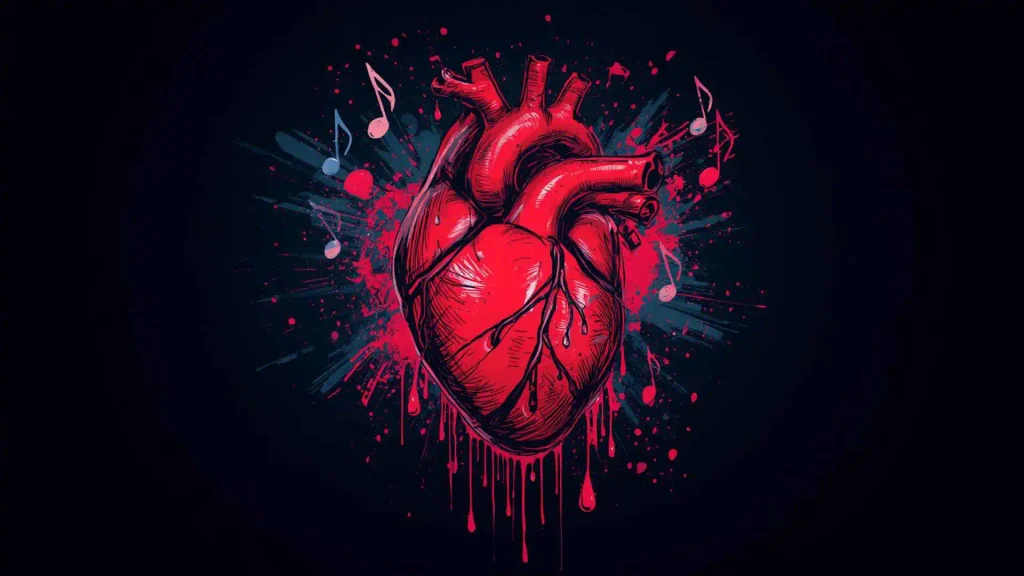
The emo aesthetic refers to the visual style associated with parts of emo culture. It can include clothing, hair, makeup, accessories, photography, and other forms of personal presentation.
The classic version often features dark or contrasting colors, expressive eye makeup, band merchandise, and layered hair. However, contemporary interpretations can look very different from the familiar 2000s image.
Social media has also broadened the term. People sometimes use emo aesthetic to describe a visual style without referring to a specific musical genre or cultural identity.
What Are the Main Features of the Emo Aesthetic?
Common elements include:
- Dark clothing or contrasting color combinations.
- Graphic T-shirts and alternative fashion.
- Layered hair, fringe, or face-framing cuts.
- Dark eyeliner or other expressive makeup.
- Studded belts, chains, wristbands, and personal accessories.
- References to favorite bands, lyrics, and album artwork.
You don’t need every element to create an emo-inspired look. A person might express the aesthetic through clothing alone, while someone else might focus on hair, makeup, or accessories.
Is Emo the Same as an Alternative Aesthetic?
No. Alternative fashion is a broad category that includes many styles influenced by music scenes, subcultures, and individual creativity.
Emo is one part of that wider landscape. Punk, goth, grunge, and other alternative styles have their own histories, even when they share dark clothing, graphic prints, or unconventional hairstyles.
For example, someone wearing a band T-shirt and black jeans might be expressing an emo, punk, grunge, or general alternative style. Clothing alone may not tell you which identity, if any, they embrace.
Emo Hairstyles and Hair Color
Emo hair became one of the most recognizable elements of the classic 2000s look. Layered cuts, side-swept bangs, and face-framing sections helped create a distinctive silhouette.
Hair styling has changed over the years, though. Today’s emo-inspired hairstyles can work with different lengths, textures, and colors instead of relying on one traditional cut.
What Is a Classic Emo Haircut?
The classic emo haircut often features:
- Choppy layers that add texture.
- Long, side-swept bangs or a dramatic fringe.
- Face-framing pieces that shape the overall look.
- Extra volume at the crown or back.
- Straightened sections for a sharper silhouette.
Some people used straighteners and styling products to create the look, while others preferred a more natural finish.
Hair type matters when choosing a cut. A stylist can adapt the layers and fringe to suit your hair’s texture, density, and natural movement rather than copying a photograph exactly.
What Hair Colors Are Associated With Emo Style?
Black hair became closely associated with classic emo fashion, but many people experimented with other colors.
Common choices included:
- Black or very dark brown.
- Brightly colored streaks.
- Contrasting highlights.
- Red, purple, blue, or other vivid shades.
- Pastel colors and creative combinations in more recent interpretations.
Hair color is a personal choice, not a test of whether someone is emo. Natural hair can fit the aesthetic just as easily as dyed hair.
Can Curly or Short Hair Fit the Emo Aesthetic?
Yes. The traditional straight, side-swept hairstyle is only one interpretation of emo hair.
Curly and wavy hair can create texture and volume naturally. Shorter cuts can use layered shapes, a defined fringe, or contrasting styling to capture similar influences.
The most useful approach is to adapt the aesthetic to your hair instead of trying to force your hair into an unsuitable style.
What Is Emo Makeup?
Emo makeup is an alternative beauty style often associated with expressive eye makeup and strong contrast. Its classic form became especially recognizable during the 2000s, when dark eyeliner and dramatic eyes appeared frequently in the scene’s fashion imagery.
However, makeup has never been a requirement for emo identity. Some people enjoy bold looks, while others prefer little or no makeup.
What Makeup Is Common in Classic Emo Style?
Classic emo-inspired makeup may include:
- Dark eyeliner along the upper or lower lash line.
- Smoky or smudged eye makeup.
- Dark eyeshadow for added depth.
- Contrasting colors or expressive details.
- A pale-looking foundation effect for those who prefer that style.
Heavy eyeliner is one of the best-known features, but not everyone uses it. The same applies to foundation and other dramatic makeup choices.
Can You Have an Emo Look Without Heavy Makeup?
Yes. A subtle approach can work just as well.
Try a small amount of eyeliner, keep the rest of your makeup simple, or skip makeup entirely and focus on clothing and hair. You can also build an outfit around band merchandise and accessories.
The emo aesthetic is flexible. Your appearance doesn’t need to match a specific decade or a celebrity’s look.
What Are Common Emo Personality Traits?
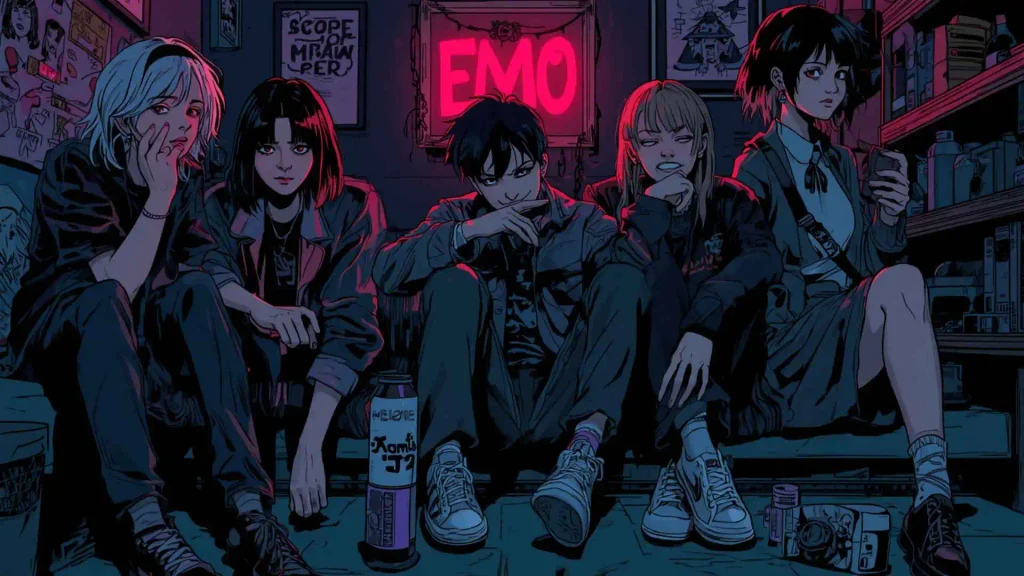
People often associate emo with emotional sensitivity, introspection, or a tendency to express personal feelings. Those associations partly reflect the genre’s history of emotionally direct songwriting.
Still, emo personality traits aren’t a scientifically established personality profile. People who identify with the subculture have different temperaments, interests, and life experiences.
It’s important to distinguish a cultural association from a claim about every person in a group.
Are Emo People Always Sad?
No. The belief that emos are always sad is a stereotype.
Emo music often explores difficult emotions, but that doesn’t mean its listeners feel unhappy all the time. A song can help someone process a difficult experience, appreciate thoughtful lyrics, or connect with a particular sound.
Emo people can enjoy humor, friendships, hobbies, celebrations, and everyday pleasures just like anyone else.
Music that explores sadness doesn’t make sadness a person’s permanent identity.
Does Being Emo Mean You Are Depressed?
No. Being emo is not the same as having depression.
Emo describes a musical, cultural, or stylistic identity. Depression is a mental health condition that qualified professionals assess using established clinical criteria. A person’s clothing, hairstyle, music preferences, or online posts cannot establish a diagnosis.
Some people may connect with emo music while dealing with emotional difficulties, but others simply enjoy the genre or its community. You shouldn’t assume someone’s mental health based on their appearance.
If you or someone you know experiences persistent emotional distress, seek support based on the person’s actual needs rather than a cultural label.
Why Do Some People Identify With Emo Culture?
People connect with emo culture for different reasons.
For some, the music expresses experiences they find difficult to put into words. Others enjoy the fashion, creativity, friendships, or sense of community that develops around shared interests.
Some people also appreciate the freedom to explore their identities without following mainstream expectations.
There isn’t one explanation that applies to everyone. Personal meaning is part of what makes subcultures diverse.
What Is the Difference Between Emo and Goth?
Emo and goth are different alternative subcultures, although they sometimes share dark fashion, expressive makeup, and an interest in music with emotional themes.
The most useful distinction is their musical history. Emo developed from the American hardcore punk scene, while goth grew out of the British post-punk movement in the late 1970s and early 1980s. AllMusic’s goth rock overview explains the genre’s post-punk roots and its distinctive musical development.
Fashion can offer clues, but it doesn’t tell the whole story. Both subcultures have changed over time, and individual styles often overlap.
What Is the Difference Between Emo and Goth Music?
Emo and goth music developed from different musical traditions.
Emo has roots in hardcore punk and often features personal lyrics, expressive vocals, melodic guitars, and shifts between quieter and more intense passages. Its later forms include a wide range of sounds, from underground indie rock to more accessible alternative music.
Goth music, particularly gothic rock, developed from post-punk. Artists associated with its early history include Bauhaus, Siouxsie and the Banshees, and the Cure, although the Cure’s music spans several genres.
Goth rock often uses atmospheric guitar effects, prominent bass lines, dramatic vocals, and darker musical arrangements. Its themes may explore romanticism, isolation, mortality, or the mysterious.
Neither genre follows a single formula. However, their different origins help explain why emo and goth aren’t interchangeable terms.
What Is the Difference Between Emo and Goth Fashion?
The styles can overlap, but each has recognizable influences.
| Feature | Emo fashion | Goth fashion |
| Common clothing | Band tees, skinny jeans, layered tops | Dark clothing, dramatic silhouettes, romantic or theatrical pieces |
| Hair | Side-swept bangs, choppy layers, varied colors | Many styles, including dramatic cuts, elaborate shapes, or distinctive colors |
| Makeup | Often expressive eyeliner and contrasting eye makeup | May include dramatic eyeliner, dark lipstick, or theatrical looks |
| Cultural influences | Emo, punk, pop-punk, and alternative music | Goth rock, post-punk, gothic literature, and dark romanticism |
| Overall approach | Often casual and music-centered | Can range from everyday dark fashion to elaborate, theatrical outfits |
These are broad tendencies rather than rules. Neither group has a uniform appearance, and many people combine elements from different alternative styles.
Can Someone Be Both Emo and Goth?
Yes. Someone can enjoy both music scenes, dress in ways influenced by each subculture, or identify with both.
For example, a person might listen to My Chemical Romance and Bauhaus, wear band shirts with black boots, and experiment with both emo-inspired hair and goth accessories.
Enjoying one genre doesn’t prevent someone from exploring another. The important distinction is understanding that the two cultures have separate histories, even when fans share interests.
Common Emo Stereotypes and Misconceptions
The public image of emo has often been narrower than the culture itself. Mainstream media and online jokes helped turn a diverse music scene into a recognizable stereotype involving black clothing, dramatic hairstyles, and constant sadness.
Those features may appear in some emo-inspired styles, but they don’t define every person or every era of the genre.
Does Emo Mean Someone Wants Attention?
No. You can’t determine someone’s motives from their appearance.
A person might enjoy distinctive clothing because it reflects their music preferences, creative interests, or sense of identity. Someone else may simply like the way a particular outfit looks.
As with any fashion style, different people have different reasons for adopting it. Assuming that everyone with an alternative appearance seeks attention replaces understanding with a stereotype.
Do All Emo People Listen to the Same Music?
No. Emo fans have varied musical tastes.
Some prefer early emotional hardcore and underground emo bands. Others enjoy 1990s indie emo, mainstream 2000s alternative rock, or newer music influenced by earlier scenes.
Fans may also listen to pop-punk, metal, indie rock, hip-hop, electronic music, or entirely unrelated genres.
The label doesn’t dictate a person’s entire playlist. Musical interests change, and people often enjoy several styles at once.
Is Emo Just a Fashion Trend?
No. Although emo fashion became highly visible during the 2000s, the term originated in music.
The genre’s history began in the 1980s, long before the familiar combination of skinny jeans, side-swept bangs, and dark eyeliner became a mainstream image.
Fashion remains an important part of how many people express emo influences, but it represents only one part of a broader cultural history.
Someone can appreciate emo fashion without following the music scene closely. Another person can be deeply interested in emo music without adopting its traditional look.
Both examples show why emo culture is broader than its appearance.
How to Explore Emo Style Without Following Stereotypes
If you’re interested in emo, you don’t need to change your entire wardrobe or adopt a specific personality. Start with the parts that appeal to you, whether that’s music, clothing, hairstyles, or the culture’s history.
How Can Beginners Try an Emo-Inspired Outfit?
Start with a few basic pieces and build from there.
- Choose a band T-shirt or graphic top that reflects your interests.
- Pair it with jeans, trousers, or another comfortable bottom.
- Add a hoodie, jacket, or layered shirt for texture.
- Experiment with accessories such as wristbands, chains, or studded belts.
- Choose sneakers, boots, or other shoes that suit your everyday routine.
You don’t need to purchase expensive alternative clothing. Thrift stores, secondhand shops, and clothes you already own can provide plenty of options.
The key is to create an outfit that feels natural to you instead of copying every detail of a particular era.
How Can You Create an Emo-Inspired Look With Your Existing Clothes?
Look at your current wardrobe for pieces that fit the aesthetic. Dark jeans, graphic shirts, striped tops, hoodies, and simple accessories can make a useful starting point.
You might add a layered hairstyle or experiment with eyeliner if those choices appeal to you. If you prefer a more understated look, focus on clothing and skip the makeup.
Small changes often work better than trying to transform your appearance overnight. You can gradually discover which parts of emo fashion suit your taste.
How Can You Explore Emo Music and Culture?
Listening to different eras of emo is a useful way to understand how the culture developed.
Consider this simple starting path:
- Explore the roots: Listen to Rites of Spring to understand the early emotional hardcore scene.
- Move into the 1990s: Try Sunny Day Real Estate, The Get Up Kids, and American Football to hear different melodic and introspective approaches.
- Discover the mainstream era: Explore My Chemical Romance, Jimmy Eat World, and Fall Out Boy while recognizing their different genre influences.
- Compare related styles: Listen to pop-punk and goth rock to understand where their sounds differ from emo.
You can also read music histories, explore album reviews, and learn about the scenes surrounding particular bands. These details help explain why the term emo has never had just one fixed musical meaning.
Frequently Asked Questions About Emo
What does emo mean in simple words?
Emo is a term that originally described a style of emotionally expressive rock music rooted in hardcore punk. Today, it can also describe a subculture and an alternative fashion aesthetic associated with that music.
What does emo stand for?
Emo is commonly understood as a shortened form associated with emotional hardcore. It isn’t a formal acronym. The term developed within the music scene and later took on broader cultural meanings.
What makes someone emo?
Someone may identify with emo through music, fashion, community, or personal expression. There isn’t one required hairstyle, clothing style, personality trait, or behavior that makes a person emo.
Are emo and goth the same thing?
No. Emo developed from American hardcore punk, while goth grew out of British post-punk. Their music and fashion can overlap, but they have distinct histories and cultural influences.
Are emos always sad?
No. The idea that all emo people are sad is a stereotype. Emo music often explores emotional experiences, but listeners have varied personalities, moods, interests, and lives.
Is emo a music genre or a fashion style?
Emo originated as a music-related term and later became associated with a broader subculture. Today, people use it to describe music, cultural identity, and fashion, depending on the context.
Conclusion: What Does Emo Mean Today?
So, what does emo mean? Emo originally described a style of emotionally expressive rock music that developed from hardcore punk. Over time, it grew into a wider subculture associated with music, fashion, community, and personal expression.
Its history includes early bands such as Rites of Spring, the diverse sounds of the 1990s, and the mainstream popularity of emo-associated artists during the 2000s. Its influence continues through music, alternative fashion, and modern online communities.
Most importantly, emo doesn’t mean that someone is always sad, dresses entirely in black, or follows a particular set of rules. People connect with the culture in different ways.
Understanding emo means looking beyond the familiar hairstyle or clothing and recognizing the music, history, and individuality behind the label.