When you push yourself during a workout, how do you know whether you are working hard enough or pushing too far? I’ve learned that understanding your body’s effort level can make every training session more effective and meaningful.
RPE in fitness gives you a simple way to measure how difficult an exercise feels without relying only on weights, repetitions, or machines.
If you are a beginner or an experienced athlete, this guide will help you understand what RPE means, how it works, and how to use it to train smarter, build strength, and avoid unnecessary burnout.
What Does RPE Mean in Fitness?
RPE stands for Rate of Perceived Exertion. It is a scale used to measure how hard an exercise feels during a workout. In strength training, RPE usually ranges from 1 to 10, where 1 is very easy and 10 means you cannot perform another repetition. It helps athletes and gym-goers adjust workout intensity based on their current energy, strength, and recovery levels.
Meaning and Definition
RPE, or Rate of Perceived Exertion, is a method used to estimate exercise intensity based on how difficult a workout feels.
Primary Meaning
In fitness, RPE measures your effort level during an exercise or training session.
Secondary Meanings
While fitness is the most common use, RPE can also appear in:
- Sports science research
- Endurance training programs
- Rehabilitation exercises
- Physical therapy settings
Real Workout Examples
Example 1:
Trainer: “How did those squats feel?”
Athlete: “Probably an RPE 8. I could have done two more reps.”
Example 2:
Coach: “Keep today’s run around RPE 6.”
Runner: “Got it. Moderate effort, not all-out.”
What does rpe mean in fitness example
In fitness, RPE stands for Rate of Perceived Exertion. It describes how hard you feel your body is working during exercise.
Most fitness programs use a scale from 1 to 10. A low number means the activity feels easy, while a high number means you are working close to your maximum effort.
For example:
- RPE 1–2: Very easy effort, such as relaxed walking.
- RPE 3–4: Light to moderate exercise.
- RPE 5–6: Moderate effort that requires noticeable energy.
- RPE 7–8: Hard exercise that feels challenging.
- RPE 9: Very hard effort.
- RPE 10: Maximum effort that you can sustain only briefly.
Imagine performing squats with weights. If you finish your set and feel you could easily complete five more repetitions, your RPE may be around 5 or 6. If you could only complete one or two more repetitions, your RPE may be closer to 8 or 9.
RPE helps people adjust their workouts without depending only on the amount of weight lifted.
What does rpe mean in fitness reddit

On Reddit fitness communities, RPE usually refers to Rate of Perceived Exertion. People often use it when discussing weightlifting, strength training, powerlifting, and workout programming.
A common Reddit-style example might look like this:
“I completed my bench press at RPE 8.”
This means the person believes they could probably perform about two more good repetitions before reaching failure.
RPE discussions often help beginners understand how hard a workout should feel. Instead of copying another person’s exact weights, you can use RPE to choose a suitable intensity for your own body.
For example, one person may bench press 100 pounds at RPE 8, while another person may use 60 pounds at the same RPE. The weight differs, but the perceived effort feels similar.
RPE is subjective, so it may not always be perfectly accurate. Beginners sometimes underestimate or overestimate their effort. With practice, people usually become better at recognizing their actual exercise intensity.
What does rpe mean in running
In running, RPE stands for Rate of Perceived Exertion. It helps runners judge how difficult their pace feels without relying completely on a stopwatch or heart-rate monitor.
A runner can use RPE to understand the difference between easy runs, tempo runs, and hard intervals.
Examples include:
- RPE 2–3: Easy jogging where you can comfortably talk.
- RPE 4–5: Steady running that requires moderate effort.
- RPE 6–7: Challenging pace that needs focus.
- RPE 8–9: Hard interval or race-level effort.
- RPE 10: Maximum sprint effort.
RPE is useful because running conditions change. Heat, hills, poor sleep, stress, and fatigue can all affect how hard a particular pace feels.
For example, running at the same speed on a hot day may feel much harder than running in cool weather. RPE helps you listen to your body and adjust your training accordingly.
RPE 7 meaning gym
RPE 7 in the gym generally means you are working hard, but you still have some energy left.
In strength training, RPE 7 usually suggests that you could complete approximately three more repetitions with good form before reaching failure.
For example, if you perform a set of 10 squats at RPE 7, the weight should feel challenging. However, you should not feel completely exhausted after finishing the set.
RPE 7 can be useful for:
- Building strength gradually.
- Practicing proper exercise technique.
- Managing fatigue during long training programs.
- Completing moderate-to-hard workout sessions.
The exact meaning can vary slightly between training systems, but the main idea remains the same: RPE 7 feels difficult without pushing you to your absolute limit.
RPE scale
The RPE scale measures how hard physical activity feels to you. Fitness professionals commonly use a 1-to-10 scale, especially for resistance training and general exercise.
Here is a simple guide:
| RPE | Effort Level | What It Feels Like |
| 1–2 | Very Easy | Minimal effort |
| 3–4 | Easy | Comfortable movement |
| 5–6 | Moderate | Noticeable effort |
| 7 | Hard | Challenging but controlled |
| 8 | Very Hard | Only a few repetitions remain |
| 9 | Extremely Hard | Almost maximum effort |
| 10 | Maximum | No additional repetitions possible |
The RPE scale helps you understand intensity based on your own experience rather than comparing yourself with someone else.
For beginners, RPE can also improve workout safety. It encourages people to avoid lifting excessively heavy weights when their body is not ready.
The scale originated from perceived exertion research and has become widely used in exercise science and training.
Rpe 8 meaning gym
RPE 8 in the gym means a very challenging set that leaves you with only a small amount of energy remaining.
In most strength-training contexts, RPE 8 suggests that you could probably complete about two more repetitions with proper technique.
For example, imagine completing barbell rows:
- You finish your set.
- Your muscles feel tired.
- You believe you could perform two additional repetitions.
- Your RPE is approximately 8.
RPE 8 is commonly used during serious strength and muscle-building programs because it creates a challenging training stimulus without requiring maximum effort every time.
However, proper form remains important. If your technique breaks down before the set ends, the weight may be too heavy regardless of the RPE you planned to achieve.
RPE 7 8 meaning
RPE 7–8 describes a challenging training intensity that falls between hard and very hard effort.
In resistance training, this range often means you have approximately two to three repetitions left in reserve.
For example:
- RPE 7: You may have around three repetitions remaining.
- RPE 8: You may have around two repetitions remaining.
This range works well for people who want to train consistently without reaching failure during every set.
RPE 7–8 can help balance effort and recovery. Training at maximum intensity too frequently may increase fatigue and make it harder to maintain good performance throughout the week.
A practical approach is to use lower RPE levels during lighter training days and gradually increase intensity during heavier sessions.
What does RPE stand for in health and safety
In health and safety, RPE stands for Respiratory Protective Equipment.
Unlike the fitness meaning, this type of RPE refers to equipment designed to protect workers from breathing in harmful substances such as dust, fumes, gases, vapors, and other airborne hazards.
Examples of respiratory protective equipment include:
- Respirators.
- Filtering facepiece masks.
- Powered air-purifying respirators.
- Breathing apparatus.
Workplaces may require RPE when workers face respiratory hazards that other safety controls cannot adequately remove.
Health and safety authorities emphasize that RPE should be selected according to the specific hazard, task, environment, and wearer. Proper fitting, training, maintenance, and storage also matter because incorrect use can reduce protection.
It is important not to confuse this meaning with fitness RPE. In a gym, RPE usually describes exercise difficulty. In a workplace safety document, RPE usually refers to respiratory protective equipment.
RPE Meaning: Fitness vs Health and Safety
| Context | Full Form | Meaning |
| Fitness | Rate of Perceived Exertion | Measures how hard exercise feels |
| Running | Rate of Perceived Exertion | Helps judge running intensity |
| Gym | Rate of Perceived Exertion | Measures training effort |
| Health and Safety | Respiratory Protective Equipment | Protects workers from airborne hazards |
Background and Origin
The concept of RPE was developed by Swedish psychologist Gunnar Borg in the 1960s. He created what became known as the Borg Scale to help measure physical effort during exercise.
Over time, strength coaches adapted the concept into the simpler 1–10 scale commonly used today.
RPE became increasingly popular as athletes looked for ways to personalize training intensity without relying solely on percentages or heart-rate monitors.
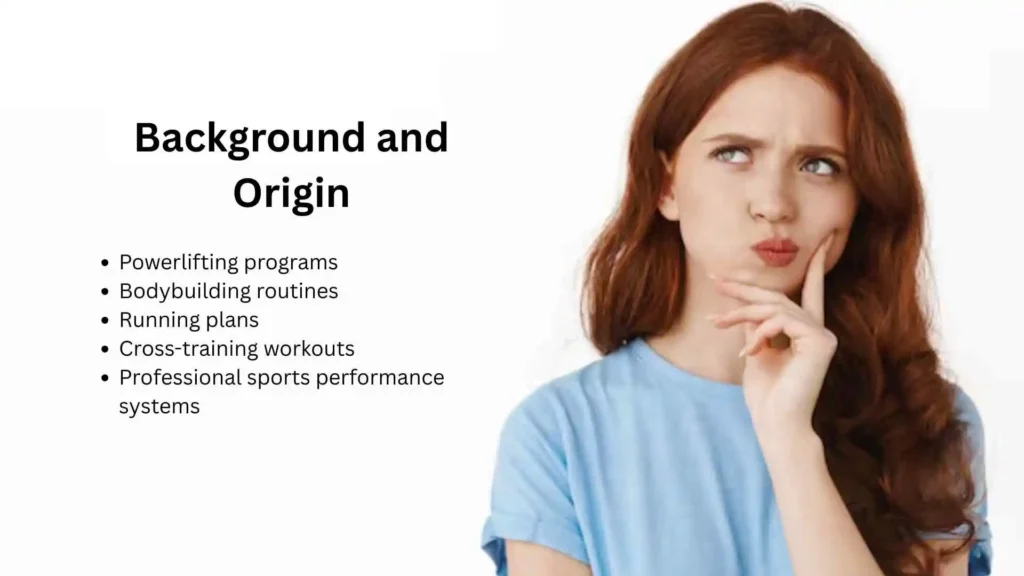
Today, you’ll find RPE in:
- Powerlifting programs
- Bodybuilding routines
- Running plans
- Cross-training workouts
- Professional sports performance systems
Usage in Different Contexts
Casual Gym Conversations
People often use RPE to describe how challenging a set felt.
Example:
“That bench press set was around RPE 7.”
Social Media Fitness Content
Fitness creators regularly mention RPE when sharing workouts.
Example:
“Try 4 sets of deadlifts at RPE 8.”
Professional Coaching
Strength coaches use RPE to adjust training loads.
Example:
“If today’s set feels like RPE 9, reduce the weight slightly.”
Sports and Team Training
Athletes use RPE to manage recovery and prevent overtraining.
Example:
“Today’s conditioning session should stay at RPE 5.”
Meanings Across Platforms
| Platform | Tone | Example |
| Informal | “Leg day felt like RPE 9 today.” | |
| Educational | “Perform 3 sets at RPE 8.” | |
| TikTok | Trendy | “POV: Coach says RPE 7 but it feels like 11.” |
| Snapchat | Casual | “That workout was pure RPE 10.” |
| Discord | Community-based | “What’s your RPE on today’s squat session?” |
Real-Life Examples and Memes
Workout Chat Examples
Friend: “How hard was that set?”
You: “RPE 8.5. Tough but manageable.”
Friend: “Could you do another rep?”
You: “Maybe one more.”
Humorous Examples
- “Coach said RPE 7. My legs heard RPE 10.”
- “Started the workout at RPE 5, ended questioning my life choices.”
Meme-Style Lines
- “Expected: RPE 6. Reality: RPE 12.”
- “When the warm-up feels like RPE 9.”
Cultural or Regional Interpretations
United States and United Kingdom
RPE is widely used in strength training, bodybuilding, and athletic coaching.
India, Pakistan, and the Philippines
Fitness influencers and online coaches increasingly use RPE in workout programs, especially among younger gym-goers.
Australia
Athletes, runners, and sports performance coaches commonly use RPE for monitoring training intensity.
Other Meanings
| Field | Meaning | Description |
| Fitness | Rate of Perceived Exertion | Measures workout effort |
| Education | Related Professional Experience | Work experience relevant to a role |
| Engineering | Rare Professional Usage | May vary by industry |
| Research | Performance Evaluation Terms | Context-specific abbreviation |
Common Mistakes and Misconceptions
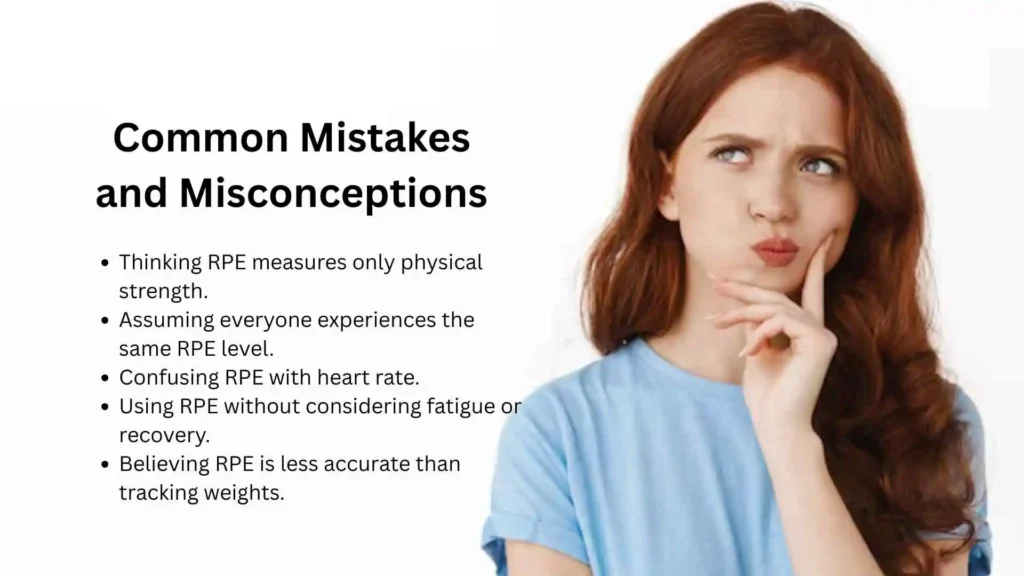
- Thinking RPE measures only physical strength.
- Assuming everyone experiences the same RPE level.
- Confusing RPE with heart rate.
- Using RPE without considering fatigue or recovery.
- Believing RPE is less accurate than tracking weights.
Psychological and Emotional Meaning
Positive
RPE helps people train confidently and avoid burnout.
Neutral
It simply describes effort without judgment.
Negative
High RPE levels may indicate excessive fatigue if used too frequently.
Understanding how a workout feels can improve body awareness and long-term training success.
Similar Terms and Alternatives
| Word | Meaning | Tone |
| RPE | Rate of Perceived Exertion | Technical |
| Effort Level | How hard something feels | Casual |
| Intensity | Workout difficulty | General |
| Training Load | Overall workout demand | Professional |
| Exertion | Physical effort | Formal |
Is It Offensive or Friendly?
RPE is completely neutral and non-offensive.
It is a technical fitness term used to describe exercise intensity.
Friendly Example:
“Keep today’s workout around RPE 7.”
Professional Example:
“The athlete reported an RPE of 8 during testing.”
Grammar or Linguistic Insight
RPE is an acronym formed from the phrase “Rate of Perceived Exertion.”
Like terms such as BMI or HIIT, it became popular because it offers a quick and simple way to communicate a complex idea.
Fitness communities often use it as both a noun and a measurement.
Examples:
- “My RPE was 8.”
- “Track your RPE after every workout.”
How to Respond
If someone mentions RPE, you can reply naturally with:
- “What weight were you using?”
- “How many reps did you have left?”
- “Sounds like a solid training session.”
- “Were you close to failure?”
- “That’s a good intensity for progress.”
Differences From Similar Words
| Term | Meaning | Main Difference |
| RPE | Perceived effort | Based on personal feeling |
| Heart Rate | Cardiovascular response | Measured objectively |
| Training Load | Total stress from training | Broader metric |
| Intensity | Workout difficulty | More general term |
| Failure | Unable to continue | Usually equals RPE 10 |
Relevance in Dating and Online Culture
Fitness has become a major part of online culture, and terms like RPE frequently appear on dating apps and social platforms.
People who enjoy gym culture may mention:
- Workout routines
- Training intensity
- Strength goals
- Fitness achievements
On apps like Tinder, fitness enthusiasts sometimes discuss workout performance, making RPE a recognizable term among gym-focused communities.
Gen Z fitness creators also use RPE regularly in workout tutorials and transformation videos.
Popularity and Trends
RPE has grown significantly in popularity thanks to:
- TikTok fitness content
- YouTube coaching channels
- Powerlifting communities
- Online workout programs
- Evidence-based fitness education
Many modern training plans now prioritize RPE because it adapts to daily performance instead of forcing athletes to use fixed weights.
As fitness education spreads online, the term continues to gain attention among beginners and experienced lifters alike.
When NOT to Use RPE
Although RPE is useful in fitness settings, there are situations where it may not be appropriate.
Formal Business Meetings
Most people outside fitness circles may not understand the term.
Job Interviews
Use clear language like “effort level” instead of fitness jargon.
Academic Writing
Define the abbreviation before using it.
Conversations With Non-Fitness Audiences
Avoid assuming everyone knows workout terminology.
Medical Discussions
Healthcare professionals may require more objective measurements than perceived effort alone.
FAQs
What does RPE stand for in fitness?
RPE stands for Rate of Perceived Exertion. It measures how hard an exercise feels based on personal effort and fatigue.
What is RPE 10?
RPE 10 means maximum effort. You cannot perform another repetition with proper form.
Is RPE good for beginners?
Yes. RPE helps beginners learn how different intensity levels feel and prevents overtraining.
What is RPE 8 in weightlifting?
RPE 8 generally means you could complete about two more repetitions before reaching failure.
Why do coaches use RPE?
Coaches use RPE because it adjusts training intensity based on daily performance, recovery, and energy levels.
What does an RPE of 7 mean?
An RPE of 7 means you feel you could complete about three more repetitions before reaching your limit. It indicates a challenging but controlled effort, often used for building strength and muscle without training to complete failure.
How do I calculate my RPE?
RPE is calculated by rating how difficult an exercise feels on a scale from 1 to 10. After a set, estimate how many more repetitions you could have performed. For example, if you could do three additional reps, your RPE is approximately 7.
What does RPE 8 mean in workout?
RPE 8 means the exercise feels very challenging, and you could probably complete about two more repetitions with good form. It is commonly used during strength training to maintain high intensity without reaching complete muscle failure.
What is the 3-3-3 rule gym?
The 3-3-3 rule in the gym is not a universally standardized training method, so its meaning can vary depending on the program or coach. It may refer to three exercises, three sets, and three repetitions, but you should confirm the specific definition being used.
Is it possible to build muscle at 55 years old?
Yes, it is possible to build muscle at 55 through consistent resistance training, adequate protein intake, recovery, and progressive increases in training difficulty. Older adults may need more recovery time, but muscle growth remains achievable with an appropriate workout plan.
Is lifting 3 times a week enough to build muscle?
Yes, lifting weights three times a week can be enough to build muscle when workouts target major muscle groups consistently. Progress depends on training intensity, progressive overload, nutrition, sleep, and maintaining a regular exercise routine.
Conclusion
Understanding what RPE means in fitness can make a huge difference in the way you train. Instead of guessing how hard you should work, RPE gives you a practical system for measuring effort and making smarter workout decisions.
Whether you’re lifting weights, running, or following a training plan, RPE helps you balance progress and recovery. The better you understand your body’s signals, the more effective and sustainable your fitness journey becomes.
Remember, successful training isn’t always about pushing harder—it’s about knowing when to push and when to hold back.
Discover More Topics:
- What Does Double Exclamation Emoji Mean? The Surprising Meaning Behind This Popular Symbol ‼️
- What Does Offset Mean? The Complete Guide to Its Meaning, Uses, and Modern Examples for 2026

Lily Anderson
Hi, I’m Lily Anderson, a passionate writer who believes in the power of prayers and positivity. Ever since I was young, I’ve found comfort and inspiration in sharing stories that uplift the soul. Writing has always been my way of connecting with people, spreading hope, and exploring the deeper meaning of life. I love exploring the intersection of faith, daily life, and personal growth through my words. Every story I write comes from the heart, and I hope it touches yours too. When I’m not writing, you can find me journaling or meditating on new ideas for prayers.
Books:
-
Whispers of Hope
-
Daily Blessings: A Prayer Journal